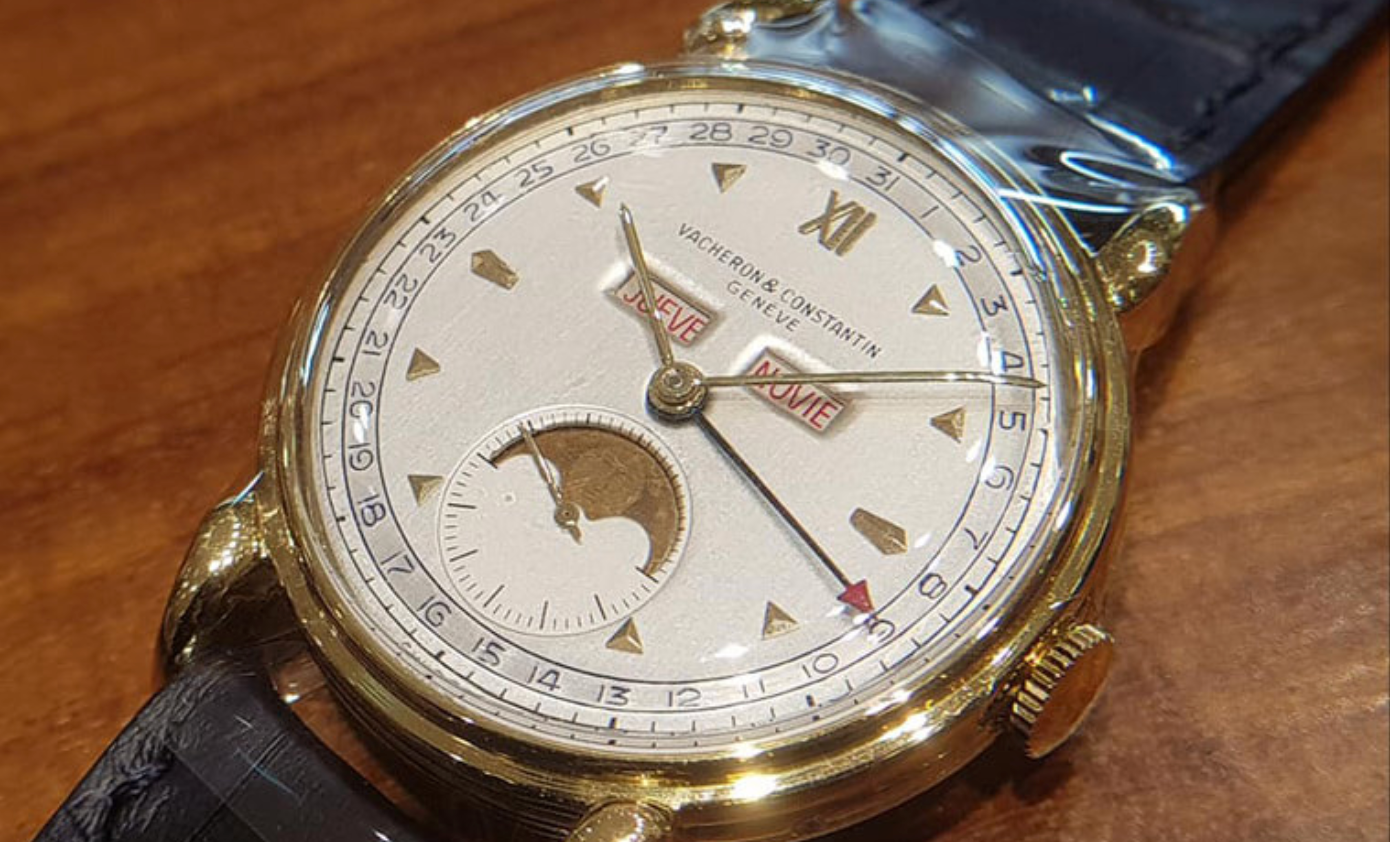
Decades ago, second-hand old watches were often regarded as “used items from others”. But nowadays, more and more young watch enthusiasts actively seek out antique wristwatches and willingly wear these timepieces that bear the traces of previous generations. The vintage trend is sweeping the watch industry, and it is not just about retro aesthetics; it is also a new generation’s re-understanding of the value of wristwatches.
When you open social platforms, you will find that the group of watch enthusiasts is evolving. In the past, when buying a watch, people preferred new store models and valued the brand new case and unopened condition; but now, a large number of young people have turned their attention to antique wristwatches produced in the 1950s, 1960s, and 1970s. These watches have been worn for decades, with natural patina on the dial, and subtle scratches on the case. They are truly “watches worn by others”, yet their popularity continues to rise.
The definition of a “buddy”

Before discussing antique watches, let’s first clarify a basic question: What constitutes an “antique” watch? In the industry, there is a general consensus: Watches that are over 25 years old can be regarded as “antiques“, while those over 100 years old are classified as “Antiques”. However, the watch collecting community has a more flexible definition of “old” – any watch that is no longer produced can be included in the category of antique watches.
The key word in this definition is “ceasing production” . Even if a watch has a very retro design, as long as it is still in production, it is not an antique watch. The scarcity of antique watches comes from the fact that they can never be produced again.
Why now?
Collecting antique watches is not a new phenomenon. The trend began in the mid-1980s when New York’s celebrities started wearing antique watches from before World War II. This nostalgic trend spread globally from the United States. But today’s antique watch market is completely different from that of thirty years ago.

The biggest change is the younger age of the collectors. In the past, antique watches were considered “the hobby of the older generation”, but now they have gained serious interest among the younger generation. Some inherit them from their elders, some discover them by chance in second-hand stores in Tokyo, and some simply come across an old watch with a certain charm on TikTok. Antique watches are no longer just “inheritance”; they have become an active aesthetic choice.
Another change is the expansion of the market size. The second-hand watch market is estimated to be worth an astonishing 23 billion pounds, and antique watches are the most “individualistic” part of it. In the antique market, there is no waiting list, no need for stock allocation, and no need to meet any purchase qualifications – if you find something you like, you can buy it directly. This sense of freedom that goes against modern consumption logic is naturally attractive to the new generation of buyers who are tired of queuing and bundled sales.
Brand: The “Antique Rule” of the Big Three
The antique watch market has a cruel reality similar to that of the modern market: the brand determines the ceiling.

Patek Philippe, Rolex and Omega are the most sought-after names in the antique watch market. Among them, the antique watches of Patek Philippe and Rolex are almost circulating as “investment items”. Rolex’s Submariner, GMT-Master, Explorer and Daytona are not only wristwatches but also cultural symbols in the antique market. Their appeal comes not only from rarity but also from the clarity of their design purpose – each model has a clear “why it exists”.
However, there is a key difference between the “brand logic” of antique watches and the modern market: precious metals are not necessarily an advantage. A steel chronograph from the 1940s may be more valuable than a gold watch of the same era because the steel model is rarer. The scarcity of antique watches comes from “existence quantity”, not “material value”.
For budget-conscious beginners, Omega, TAG Heuer and IWC are more practical choices. The antique dress watches of Omega and IWC can often be found for under $3,000; the retro racing chronograph watches of TAG Heuer also have good options within the range of $7,000. These brands have a common advantage: they are still in operation, which means that parts and maintenance resources are relatively easier to obtain.
Core principle: Originality is everything.
If one could summarize the rules of antique watch collecting in just one sentence, it would be: Originality is everything.
If the dial of a watch is refurbished, its value may drop by more than 90%. A non-original crown, a set of aftermarket hands, or even a screw that has been replaced, will make collectors frown.
The most subtle aspect of antique watches lies in the paradox of “condition”. If a watch is meticulously maintained by its owner and regularly serviced, it may be overly polished. And a watch that appears “scuffed” might actually be completely original. In the world of antique watches, “perfection” often means “having been tampered with”, while “defects” sometimes prove to be “authenticity”.
The dial is the first checkpoint in identifying antique watches. The early screen printing process was inherently unstable, coupled with imperfect material and craftsmanship, resulting in the rarity of original printed dials today. If the watch you hold has a porcelain or enamel surface, carefully check for cracks and peeling. Refurbished dials often show flaws at the junction of the font strokes and the dial – slightly rough or with oil stains.
The three most common pitfalls that beginners tend to fall into

The first pitfall: Only buy “attractive” ones. The waters for antique watches are deep. Dial refurbishment, parts replacement, and movement modification – each of these can cost you an “investment-grade” price to get something that is “player-grade”. Before making a purchase, take the time to research the specific model you are interested in and understand what the correct configuration should be.
The second pitfall: Only look at the watch, not the seller. There is a frequently repeated saying in the world of antique watches: “The dealer is not the buyer.” A reputable dealer will tell you the history, condition, and any modifications of the watch. However, an unknown online seller may not even know what they are selling.
The third pitfall: No budget reserved for maintenance. Antique watches require more care than modern watches. Aging waterproof rings, dried-up movement oil, and fragile glass are all inevitable issues. It is recommended to set aside an additional 20% of your purchase budget for maintenance costs.
Final words
The most fascinating aspect of antique watch collecting is not how much it can increase in value, but rather that each watch carries a unique past that cannot be replicated.
A 1950s Omega Constellation watch, perhaps once belonged to an ordinary person who had never heard of the term “collecting”. He wore it to work, back home, for meals, and to sleep every day. Over the decades, it developed the uneven oxidation on the dial and the subtle roundness on the edges of the case. These things cannot be manufactured; they can only be experienced.
Antique watches are not “second-hand goods”; they are the embodiment of time. What you purchase is not a watch, but a period of time that someone else lived through.
