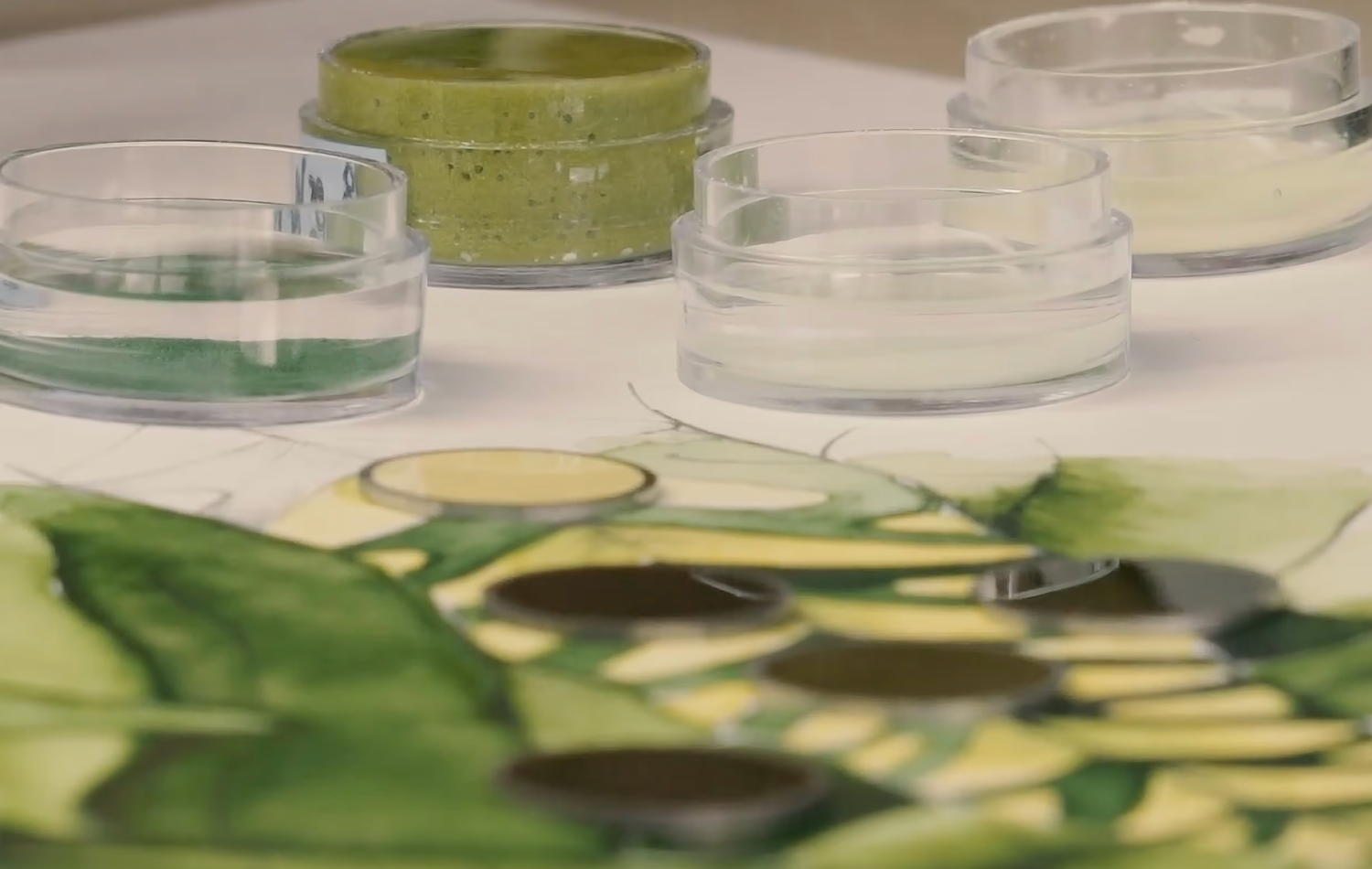
In the world of watches, enamel dials are widely regarded as a “high-end craftsmanship”. They do not improve the accuracy of timekeeping, but they can permanently engrave a painting on the wrist. Vacheron Constantin has the Explorer series, Breguet has the Classique enamel model, and Jaeger-LeCoultre, Piaget, and Athens have also released exquisite enamel works. However, if you compare the enamel discs of Patek Philippe with those of them, knowledgeable people can immediately tell the difference at a glance.
This difference is not a matter of “who used enamel”, but rather Patek Philippe has made enamel a synonym for “rare craftsmanship”, while most brands merely “used enamel”.
Difference 1: Skills are not “mastering one”, but “comprehending all”
For the vast majority of brands, the enamel dial designs usually involve only one technique. Filigree is filigree, and micro-painting is micro-painting.

The enamel artisans of Patek Philippe are required to master four traditional enamel techniques: filigree enamel, inlay enamel, gold foil enamel, and micro-painting enamel. The brand’s official statement clearly indicates that only a very small number of master craftsmen can master all these techniques.
What’s more crucial is that Patek Philippe often mixes multiple techniques on the same dial. For example, in Ref. 5077/100R-072, the dial is first covered with Flinqué transparent enamel and hand-carved wave patterns, then the outline of rocks is sketched with filigree enamel (using approximately 41 centimeters of gold thread), and finally, the details of the parasol, tourists, and waves are depicted with micro-painting enamel (with an additional 10 colors). The entire dial needs to be fired at 800 to 840 degrees Celsius for 15 to 20 times.
The complexity of this “technique stacking” is an entirely different order of magnitude compared to doing a single dial with a single technique.
Difference 2: The output is not “low”, but “unique grade”

The enamel watches of Vacheron Constantin are usually released in limited quantities, and the enamel models of Breguet also have clear production control. However, the enamel plates of Patek Philippe are mostly directly part of the “Rare Handcrafts” series, and their positioning is as unique pieces or very small quantities.
The description of Patek Philippe enamel watches by Christie’s Auction House is straightforward: “Watches with rare handcrafted soldered enamel dials usually have a very limited production. They have now become highly collectible and representative works of watch art.”
How long does it take to make a Patek Philippe enamel plate? Taking Ref. 5177 as an example, an enamel master takes approximately 7 days to produce a finished piece. The whisky-themed enamel plate of Ref. 5738/50J needs to be fired 11 times at a temperature of nearly 765°C. The lemon-themed enamel plate of Ref. 5077/100J needs to be fired 8 to 9 times at temperatures ranging from 750 to 820°C, using 30 different colors of enamel.
This investment determines that Patek Philippe’s enamel watches cannot be “mass-produced”. When other brands use enamel as an option for their product line, Patek Philippe makes it into an “event” with only a few pieces produced each year, or even just one piece.
Difference 3: Historical Burden, Not Found in Others
The enamel tradition of Patek Philippe can be traced back to Ref. 2526 – an automatic self-winding wristwatch from the 1950s, renowned for its pure white or cream-colored enamel discs.

Hodinkee conducted an in-depth investigation of this watch. They discovered that modern enamelists are unable to completely replicate the original cream color of 2526. There are three reasons for this: The metal base of the original dial was silver, while modern enamel discs usually use copper; the original might have been fired only twice, while modern enamel discs need to be fired six to ten times for durability; the enamelists and their craftsmanship details from that time have been lost.
What does this mean? Patek Philippe has a collection of “unforgeable” enamel plates. The enamel watches of other brands aim for “beauty and rarity”; while Patek Philippe’s enamel watches carry with them a history that cannot be replicated. The enamel plate of Ref. 2526 remains a sought-after object by collectors today, and its “unreproducibility” precisely reinforces Patek Philippe’s legendary status in the field of enamel.
Difference Four: Who the enamelist is determines the ceiling

The head of the Swiss independent enamel dial factory Donze Cadrans once told Hodinkee that they produce enamel dials for brands such as Patek Philippe, Lange, Athens, Hermès, etc. The entire factory has only six people, and together they have hundreds of years of experience.
However, there is a key difference between Patek Philippe and these brands: it has stricter quality control standards for enamel dials and a deeper involvement in the craftsmanship. The enamel craftsmen at Patek Philippe not only need to be skilled at making them, but also need to repeatedly fire, inspect, scrap, and start over according to Patek Philippe’s standards within the brand or in long-term cooperative workshops.
If a Patek Philippe enamel dial has bubbles, color differences, or uneven thickness, it will be a waste. This “costless elimination rate” is something other brands find it difficult to follow. Because most brands accept the “pass rate” from suppliers when purchasing enamel dials; Patek Philippe, however, accepts what they define as the “perfect rate”.
Conclusion
Returning to the original question: For the same enamel plates, what are the differences between Patek Philippe and other brands?
Other brands are making “enamel watch dials”, while Patek Philippe is creating “Patek Philippe’s own enamel watch dials”.
The former is the application of a craft, while the latter is the ultimate test of a craft. The use of multiple techniques, the production of rare individual pieces, the historical background that cannot be replicated, and the cost-free elimination criteria – all these four things combined form the invisible barrier between Patek Philippe’s enamel plates and those of other brands.
Of course, the micro-painting enamel of Vacheron Constantin and the Classique enamel models of Breguet are themselves works of extremely high quality. However, when they are placed in the same display case along with Patek Philippe’s rare craftsmanship, those who understand will understand: Some enamel plates are for wearing; some are for waiting.
