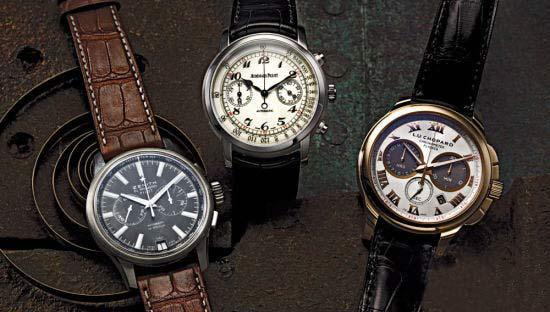
Many people believe that it is safest to put the watch back in its case when not wearing it. However, if you leave it there for a year or two without touching it, the watch might be experiencing “chronic suicide” – the movement oil drying up, the waterproof ring aging, and even the appearance of stains on the dial. Storage, in fact, is a subject that requires more common sense than wearing.
In the watch industry, there is a counter-intuitive consensus: Watches are often not damaged by wearing them, but by being stored improperly. Watches worn on the wrist have their movements running, lubricants evenly distributed, and sealing rings remaining elastic. However, those carefully stored in safes or drawers might be heading towards “stalling” in a state of inactivity.
If you plan to leave a watch idle for a period of time, or if your watch hasn’t seen the light of day for a long time, the “Storage Guide” below is worth reading carefully.
The First Killer: Solidified Lubricating Oil

The movement of a mechanical watch contains dozens of friction points, and it relies on lubricating oil to reduce wear. When you wear the watch every day, the gears’ rotation will evenly distribute the oil to all the bearings and gears.
However, once it stops working and is left idle for a long time (usually more than a few months), problems arise. The lubricating oil will gradually deposit due to gravity and lose its fluidity; worse still, over time, the oil will oxidize, thicken, and eventually dry up on the gemstone bearings and the shafts of the gears.
When you put it on again or manually wind it to make it start running, the dried-up oil sludge not only fails to provide lubrication but instead becomes a grinding paste. Every time the gears rotate, they are wearing down the metal. Many watches that have been idle for a long time will have severe timekeeping errors or even get stuck when they are restarted because they have experienced “dry grinding” upon startup.
Solution: If your watch has a manual winding function, it is recommended to wind it manually once a month for a few days to allow the movement to rotate and circulate the lubricating oil. This will enable the lubricating oil to flow again and maintain an oil film on the surfaces of the parts. For automatic mechanical watches, you can also manually turn the crown several dozen times to make it run for a few days.
Invisible Killer: Aging Waterproof Ring

The waterproofing of a watch relies on the rubber sealing rings at the watch glass, bottom cover and crown. Rubber is most susceptible to “inactivity”.
When you wear the watch frequently, the opening and closing of the crown, the force exerted by the bottom cover, and temperature changes will keep the rubber ring in good elasticity. However, if it is left in a static state for a long time, the rubber ring will remain in a compressed state continuously, and its elasticity will gradually be lost. Additionally, the moisture in the air and dust will accelerate the aging and hardening of the rubber ring.
When you retrieve this watch after six months, although it may not have come into contact with a single drop of water, its original “100-meter waterproof” feature might have deteriorated to “only resistant to handwashing water”.
Solution: For watches that are stored for a long time, the crown must be tightened. Do not pull out the crown for “ventilation” as it would provide a convenient passage for moisture. Moreover, the storage environment must be kept dry.
The chronic poison of the dial: Humidity and moisture

If you keep the watch in a damp drawer in the south or in a cabinet near the bathroom, the moisture in the air will seep into the watch case through the aged and brittle waterproof seal, or through temperature changes.
What’s even more terrifying is that many high-end wristwatches have a stainless steel case. Although stainless steel is called “unrustic”, it merely means it is “not prone to rusting”. Once there is a small amount of moisture inside the case, and it remains enclosed inside for a long time, the paint on the dial, the luminous coating, and even the steel parts of the movement will gradually develop oxidation spots, and even get moldy and foggy. This kind of damage is irreversible. A perfectly intact watch can be ruined in this way.
Solution: The storage environment must be moisture-proof. You can place a few packets of desiccants (silica gel packets) beside the watch box and replace them regularly. Never put the watch in the bathroom, kitchen, or near heaters or humidifiers. If conditions permit, buying an electronic moisture-proof box with constant humidity is the most reliable option.
Details determine life and death: Four essential tips for storage
In addition to moisture protection and regular chain-lubrication, the storage location and posture also require attention.
1、Avoid strong magnetic fields. Do not place the watch near computer mainframes, speakers, microwave ovens, or bags with magnetic clasps. Once the hairspring is magnetized, the watch’s timing will become erratic. If there is a magnetic safety box or storage box in the house, be sure to keep the watch separate.
2、Separate leather straps from steel straps. Leather straps are most afraid of moisture and pressure. When not in use for a long time, it is recommended to remove the leather strap and store it flat or in an arc shape, and stuff a piece of paper inside the strap to maintain its shape and prevent creases. For steel straps, be careful to prevent scratches. It is best to have each watch in its own separate watch bag or box to prevent multiple watches from rubbing against each other.
3、Do not “power off” mechanical watches. For quartz watches, it is recommended to remove the battery if not worn for a long time to prevent battery leakage from corroding the movement. This can be devastating in high-end quartz watches worth tens of thousands of dollars. But for mechanical watches, try not to let them completely stop. Regular chain-lubrication is the best protection.
4、Avoid direct sunlight. Long-term exposure to ultraviolet rays will cause the dial to fade, especially for those with colored dials or antique watch finishes, as well as the aging of leather watch straps.
Conclusion
A fine watch is the art of precision mechanics and time. But the fate of machinery lies in its movement.
No matter how expensive your watch is, how deep it is waterproof, or how finely it is polished, if you just leave it in its case without caring, it will gradually lose its vitality. Storing a watch is definitely not as simple as “putting it in a safe place and leaving it alone”. It requires you to treat it like an old friend, checking it every month, winding it up, and listening to the sound of it ticking again.
Don’t let your precious watch “commit suicide slowly” in its case. Sometimes, the deepest love is to make it start moving.
