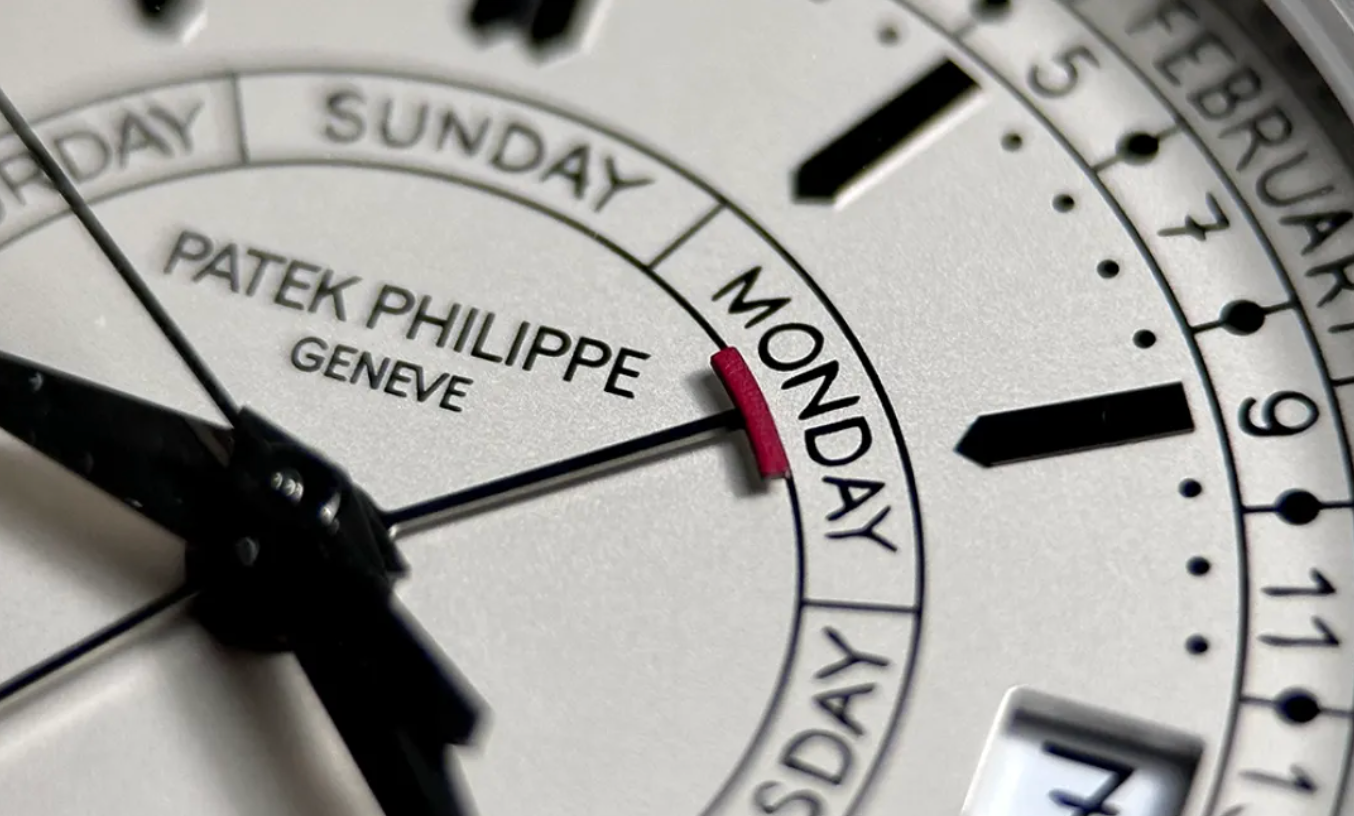
When buying a watch, many people are concerned about a practical question: how much will this watch be worth in the secondhand market later on. Numerous myths circulate online—such as “Rolex watches retain value effortlessly” or “buying a watch is like investing”—but in reality, even within the same brand, resale values can vary dramatically across different models.
Watches are fundamentally consumer goods, and most lose value the moment they leave the store. So-called “value retention” generally means less depreciation and easier resale, not guaranteed profits.Decompose the underlying logic of the second-hand watch market and understand what exactly determines the price of a second-hand watch.
The “thermometer” of the second-hand market: How to determine the preservation rate?
Before discussing the influencing factors, let’s first understand a core indicator: the preservation rate.
The preservation rate, simply put, is the percentage of the second-hand transaction price relative to the official price. A price higher than the official price is called “premium”, while a price lower than the official price is called “discount”. The quarterly reports released by Morgan Stanley and WatchCharts use this indicator to track the performance of various brands in the second-hand market.
Take the data for the second quarter of 2026 as an example: the overall preservation rate of Patek Philippe is approximately +15.4%, Rolex is approximately +9.8%, and Audemars Piguet is approximately +3%. This means that the watches of these three brands can generally be sold at a price above the official price in the second-hand market. However, for the vast majority of other brands, the second-hand price is discounted by 30% or more compared to the official price.
But this is only the average value for the brands. Within the same brand, the preservation rates of different series can vary greatly. The Nautilus and Chronograph series of Patek Philippe have long traded at a price higher than the official price, while the Calatrava series has to be discounted by more than 30%. Rolex’s Oyster Perpetual series has a premium of approximately 35%, while the Sea-Dweller model has to be discounted by approximately 21%.
Therefore, when looking at the preservation rate, one should not only consider the brand, but also the specific series and model.
The key factors determining the second-hand market situation
Brand: The “Matthew Effect” of the Big Three

In the second-hand watch market, there is an extremely harsh reality: Only Rolex, Patek Philippe and Audemars Piguet are the three brands that can still circulate at prices higher than the official price in the second-hand market overall.
The analysts from Morgan Stanley stated in their report that the performance of most brands in the second-hand market more reflects that “consumers shift to seeking cost-effectiveness when the official price rises”, rather than the brand’s own premium ability. In other words, the lower second-hand prices of other brands are not because they “retain value”, but because the official price is set too high, and the second-hand market is merely squeezing out the water.
This differentiation becomes more obvious during the recovery from 2025 to 2026. The market recovery is mainly driven by the “three giants”, and even if the prices of other brands rise, the discount relative to the official price is still huge: Cartier is discounted by about 31%, Omega by about 36%, and Tudor by about 41%.The brand determines the “ceiling” of the preservation rate.
Style: Sporty Steel Edition vs Formal Edition

Within the same brand, the value retention capabilities of sporty models and formal models are almost like two different species.
Taking the market situation in 2026 as an example, the performance of popular sporty models is generally robust: the recovery prices of Rolex Submariner, Daytona, and GMT models are mostly between 95% and 180% of the official price; Patek Philippe Nautilus and Chronograph models have long been above the official price by 15% to 80%; the value retention rate of Audemars Piguet Royal Oak steel models is approximately 70% to 85%, and their circulation speed is also fast.
However, the ordinary formal models present a different picture: the recovery price of Patek Philippe Calatrava is only 55% to 70% of the official price, and “the liquidity cycle is long and the buyers are few”. Rolex Day-Log (excluding the popular market segments) is about 70% to 85%, while gold-filled and diamond-set formal models depreciate even more.
Sporty models win because they are “universal across all scenarios”, while formal models lose because they are “limited in usage scenarios”. If a watch can only be worn when wearing a suit, the buyer pool will be significantly reduced.
Scarcity: True Scarcity vs False Scarcity

The true scarcity comes from production halts, limited quantities, special designs or historical significance. The supply is rigid and there is a stable group of collectors behind it. Whenever Patek Philippe Nautilus announces a production halt, the second-hand price rises accordingly. Such watches will not depreciate significantly due to short-term fluctuations.
On the other hand, “false scarcity” is created by brands through distribution control, queuing and quantity restrictions to create a short-term imbalance between supply and demand. Before 2022, any Rolex was regarded as “buy it and you win”, and speculative funds pushed the price to an irrational level. After the bubble burst, the second-hand prices of popular brands dropped by approximately 60% from their peak. When the tide receded, true scarcity emerged and false scarcity was exposed.
Quality and accessories: A little off, a lot off.

For ordinary buyers, this is the factor that is most easily overlooked but which directly affects the selling price.
A complete original case and original watch body without any replaced parts will make buyers willing to pay a premium. A watch with all its accessories will not only have a higher selling price but also a much faster transaction speed when it is sold. On the contrary, if the case has been polished, the original strap is missing, and the warranty card is lost, the price will be significantly reduced.
Today, with the increasing transparency of second-hand transactions, “condition” has become a hard currency.
How to preserve the residual value of your wristwatch when wearing it daily
If you want to retain the second-hand residual value of the watch as much as possible, you can refer to the following suggestions.
- When choosing a watch, prioritize the classic models that have gained market recognition. Approach seasonal limited editions and special color schemes rationally. Don’t blindly purchase watches with complex features just for the sake of gimmicks.
- Properly store the warranty card, watch box, and spare watch parts. Do not lose them.
- Do not modify the watch privately. Adding diamonds or changing the dial will significantly reduce the value of the watch in the second-hand market.
- Try to avoid bumps and minimize excessive polishing. Preserve the original edges of the watch case; prioritize choosing the official service center for maintenance and repair, and keep the receipts.
- Keep a calm mindset: The key to a watch lies in the wearing experience. Don’t make preservation value the primary selection criterion. Most watches are consumer goods, and ordinary models should not be regarded as investments.
The last thing I want to say
The issue of wristwatch value preservation boils down to this: what you buy is a watch, not a deposit certificate.
The reason why the popular sports models of the three major brands retain their value is that there are enough people worldwide who are willing to pay for them in the second-hand market. This demand is real, continuous, and across cycles. And for other brands of watches, even if their official prices are high and there are many advertisements, if there is not enough demand in the second-hand market to absorb them, value preservation becomes impossible.
If you want to wear it and sell it at the same time, remember the three simplest principles: choose the three major brands, select the sports steel models, and keep the complete set of accessories. As for other watches, buy it because you like it, not because it “retains value”.
